
How concerned communities can help Nidderdale’s curlews
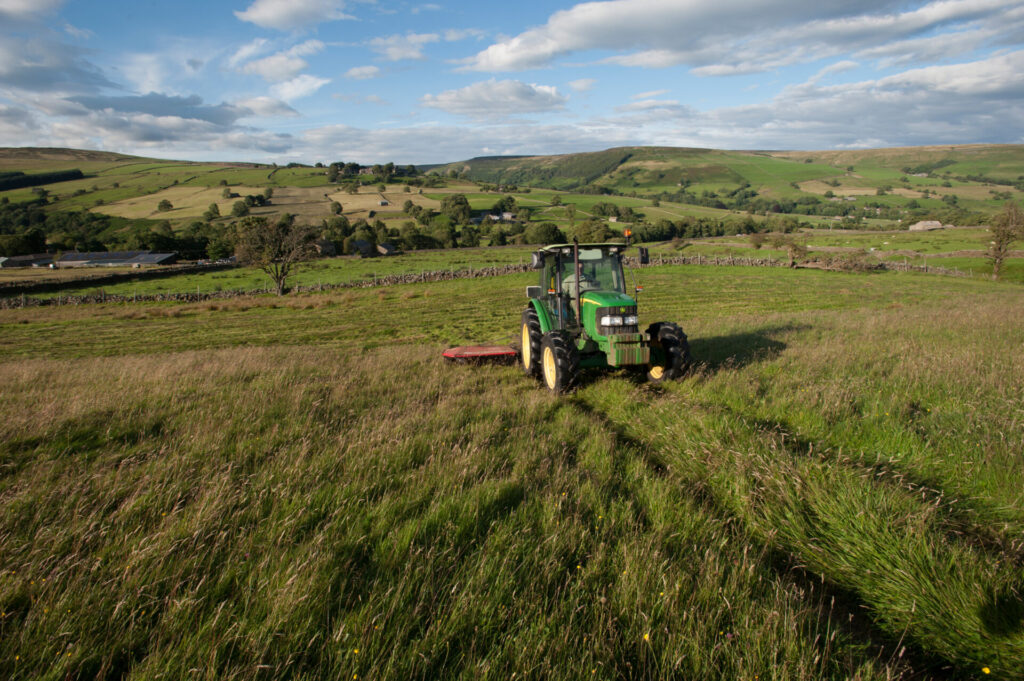
At this time of year, many people contact Nidderdale National Landscape because they are concerned about curlews in their local area, particularly when silage-making and grass cutting get under way.
That concern is understandable. The Eurasian curlew is one of the UK’s most rapidly declining birds and, for many people, its call is one of the defining sounds of our farmland, meadows and moorland fringes.
While concern is often highest once mowing is under way, the work that gives curlews the best chance has to begin much earlier, with communities, farmers and land managers preparing together ahead of the next breeding season.
That can mean building relationships with farmers and landowners, identifying likely breeding fields, supporting local monitoring, gathering field records, putting up seasonal signs where appropriate, and preparing practical action before curlews return in spring.
Matt Trevelyan, farming in protected landscapes (FiPL) officer at Nidderdale National Landscape, said: “Many people ask what can realistically be done to help. The truth is that effective conservation requires a huge, long-term effort, hard work, and attention to detail.
“The good news is that we all have it within our power to help in some way or another.
“We need passionate people to facilitate the meaningful changes which will help curlews in the long term. The National Landscape can help you start a community-based project, to raise the profile of this special bird, making their plight impossible to ignore, and co-creating a curlew-friendly landscape, hand in hand with local farmers.”
Curlews nest on the ground in shallow scrapes in long grass. Their nests and chicks are extremely difficult to see from a tractor cab, which means mowing, rolling, topping, fertilising and overstocking can all create risks during the breeding season.
It is generally recommended that fields used by breeding curlews are not mown until after 15 July. However, grass cutting can begin as early as May, and many fields within the National Landscape are cut several times over the summer.
Two local projects, the Darley Beck Curlew Project and the Hartwith Curlew Project, show what community-led action can look like in practice.
The projects follow curlews from their arrival in early spring through to autumn, tracking territories, nests and individual chicks through to fledging. They pinpoint what is happening in the field with the accuracy required to inform useful interventions.
Their work includes the use of thermal-sensing drones to help locate nests, temporary nest fencing and close collaboration with farmers. It also includes work in schools, work with MSc students, cultural events, curlew conferences and wider public awareness.
New groups should keep expectations realistic in the first year. A successful project takes time to build. Volunteers need to become familiar with maps, apps, equipment, curlew behaviour and the issues affecting breeding success.
The human side is just as important. Groups need time to identify land managers, establish permissions, keep farmers and volunteers on board with the project, raise funds, distribute funds, administer the project and communicate what they are doing to the public.
Farmers and land managers must be at the heart of this work. They know the land, they make the day-to-day management decisions and they have the power to make real change. It is essential that they feel supported rather than criticised.
The good news is that more farmers are taking special care to look after curlews on their land, seeing this as part of their stewardship. Many are acting out of love for the bird and a recognition that every chick counts.
Pressure from meso-predators, usually crows and foxes, will often mean that fledging rates remain too low to sustain local populations. Targeted and evidence-based predator management can therefore play an important role as part of a successful curlew project.
Some farmers can receive Defra payments for delivering environmental outcomes that benefit curlew, and Nidderdale National Landscape can help them understand the options. These grants sit within the Environmental Land Management framework, and include the Sustainable Farming Incentive, Countryside Stewardship and the Farming in Protected Landscapes Programme.
Communities can also help by recording curlew presence on land proposed for development. Curlews are particularly vulnerable to development because they need open landscapes, low disturbance and quiet nesting fields. Date-stamped photographs and clear field notes can be submitted to local authority ecology teams for consideration as part of the planning process.
Nesting birds are protected under the Wildlife and Countryside Act 1981, however the Act also contains a clause stating that no offence is committed if the destruction of a nest or eggs “was the incidental result of a lawful operation and could not reasonably have been avoided”. Farmers can argue that delaying mowing would cause forage loss, crop spoilage, contractor disruption or disproportionate economic harm. As a result, prosecutions are extremely rare.
Protecting curlew requires cooperation between farmers, communities, conservationists, planners and local authorities. No single measure is enough on its own, but together, these efforts can make a real difference.
If you are interested in starting a curlew project in your area, Nidderdale National Landscape can help you take the first steps. Matt recommends meeting up in the autumn to prepare for the following breeding season.
To find out more, contact Matt Trevelyan at [email protected] or call 07745 544872.