Making the most of FiPL – Mallard Grange Farm
James and his family farm a mix of arable, cattle, sheep and laying hens across 500+ acres. Tenant farmers since 1933, the family has no shortage of expertise but after an exceptionally hard year in 2019/20, James started to explore different methods of securing a farming future for the land and the livestock.
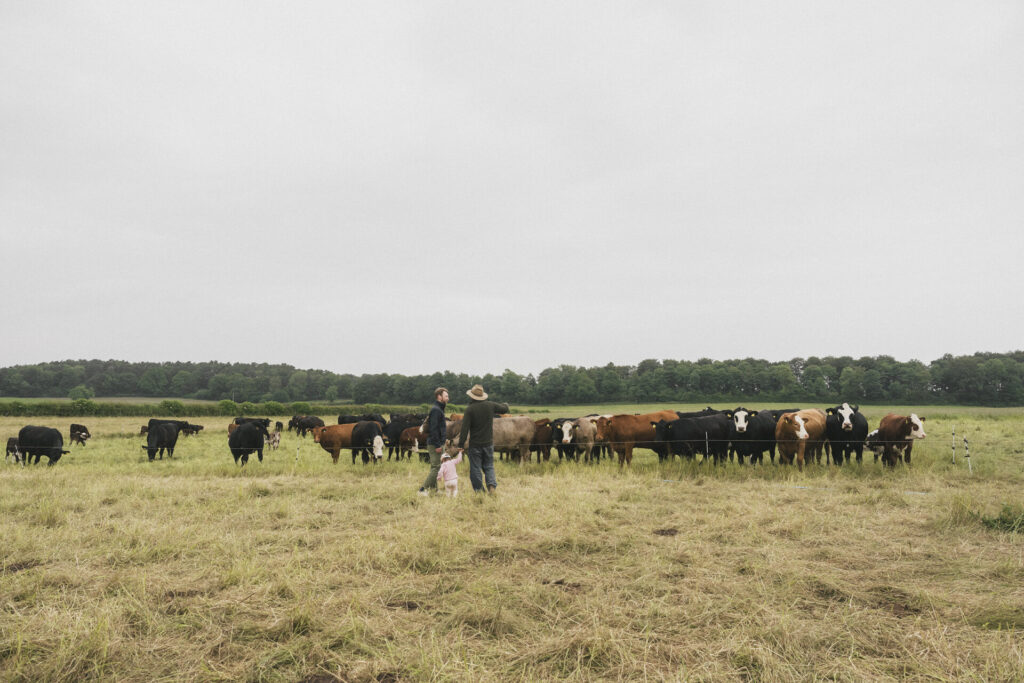
Working alongside the FiPL team at NNL, James has been able to secure grant funding towards the infrastructure needed to transform the way the land is managed for grazing. The mobile water and electric fencing systems allow adaptive multi-paddock grazing (AMP) across herbal lays and permanent pasture.
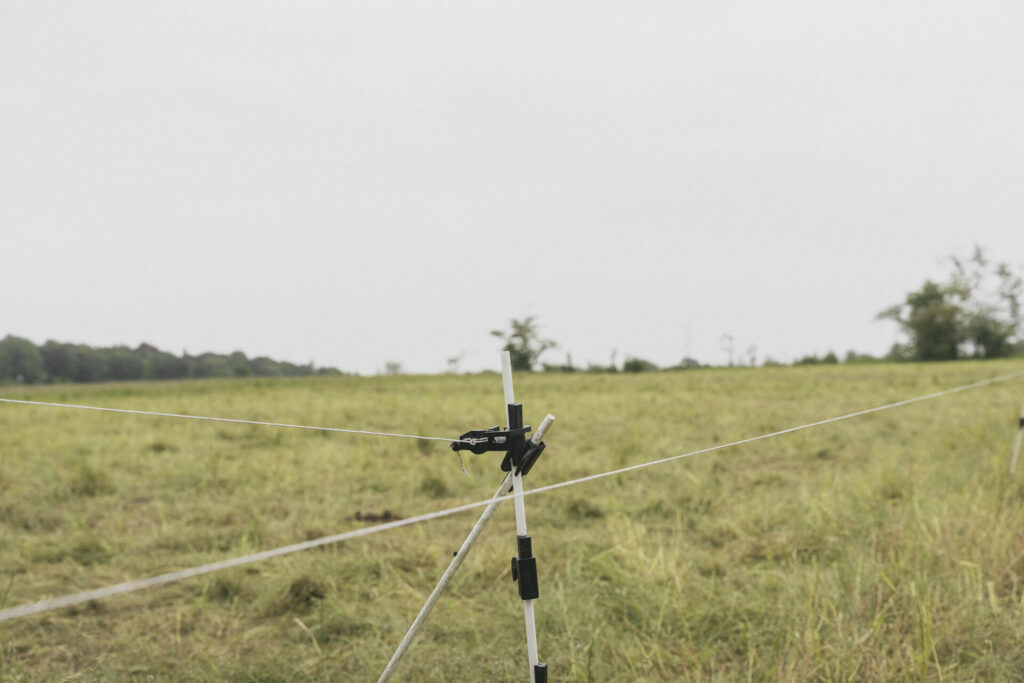
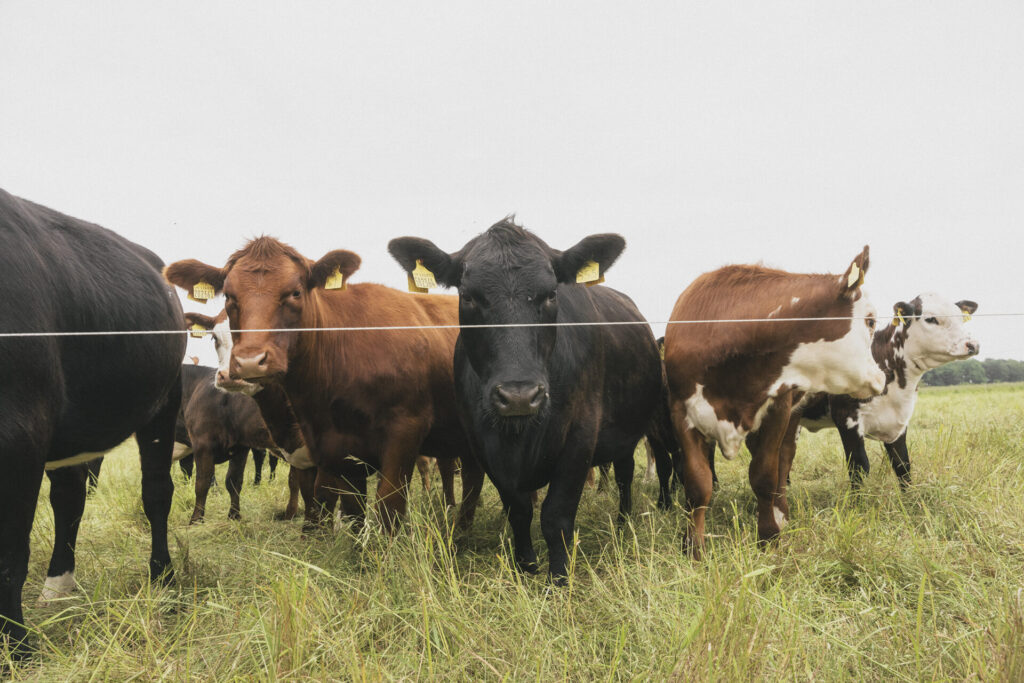
Moving fencing every 12 hours to create relatively small paddocks for the 60+ cattle on the farm sounds hugely time consuming but this is where the Kiwitech electric fencing comes in. The system enables the farmer to put up or take down a fence in a single pass from the seat of the quadbike. James describes it as ‘really easy’ electric fencing:
“The Kiwitech funded through FiPL provides that electric fencing element that’s needed for this area. It can put 500m of fencing up in five or six minutes and it does it all from the bike seat. It brings it all in, takes it all out, pulls the post out for you, it does everything.”
Of course, there can be no grazing without water. FiPL funding has contributed towards a mobile water unit, which takes water from the farm using a 1.5km pipe. This ensures that wherever the cattle are grazing, there is a fresh water supply.
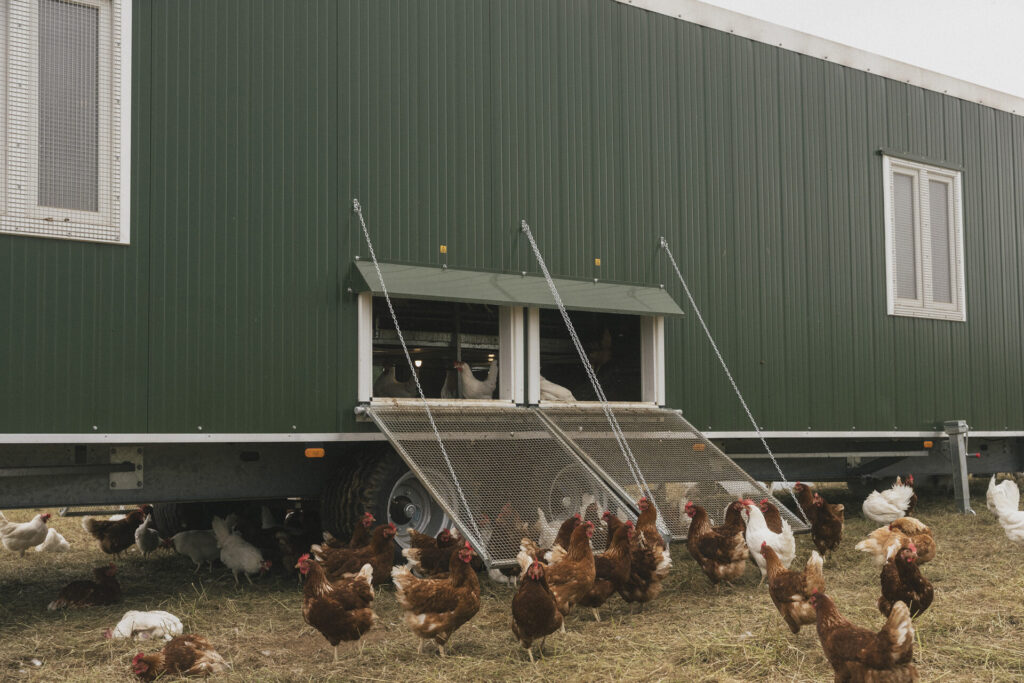
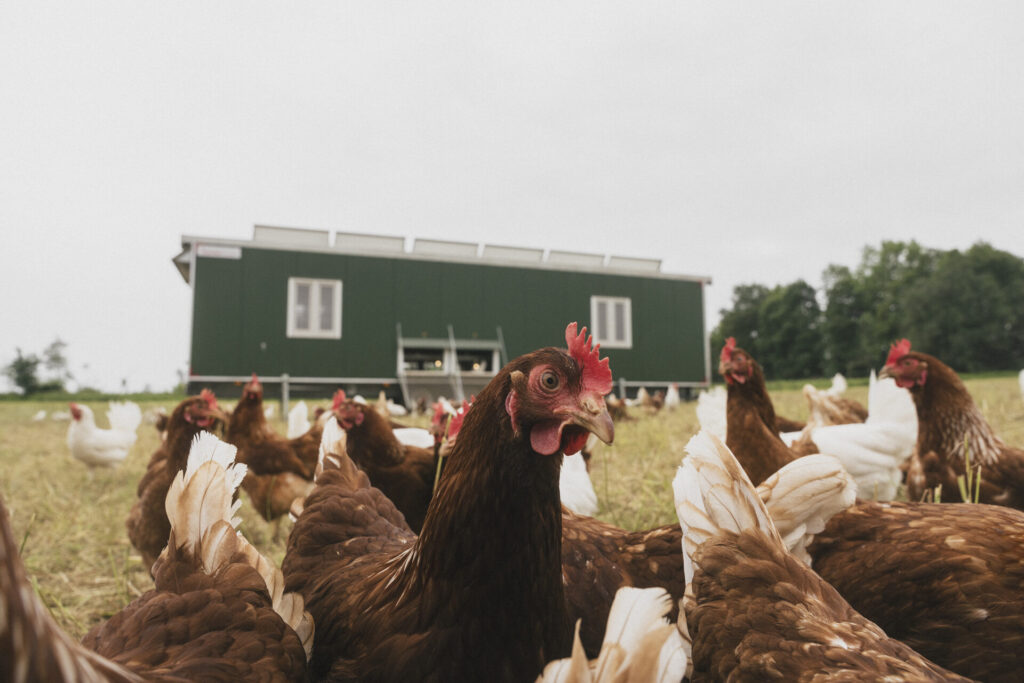
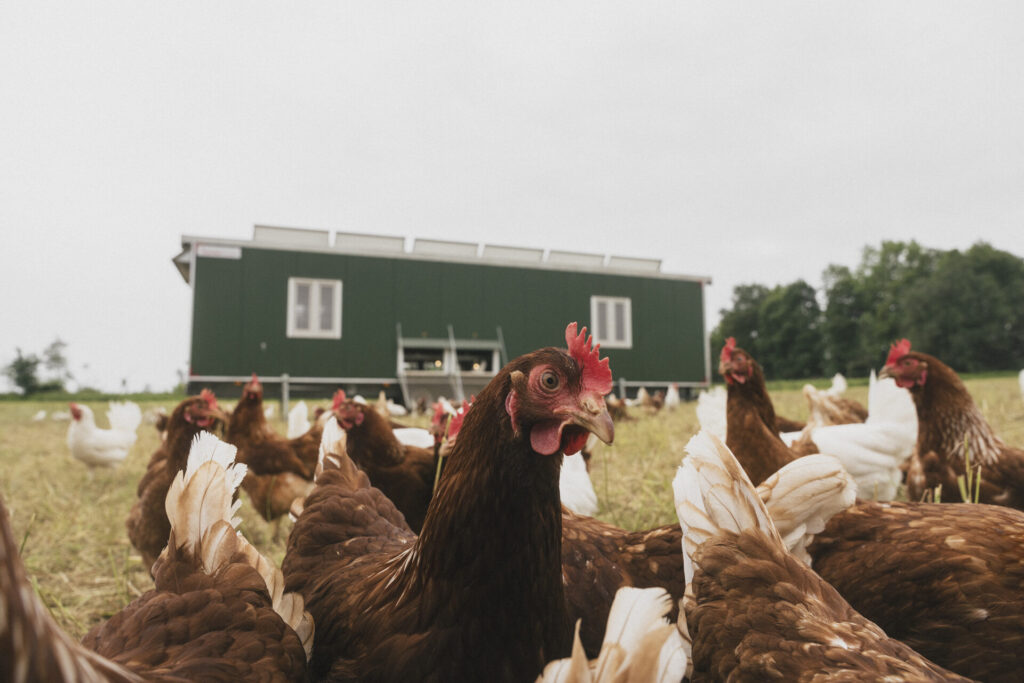
The search for alternative incomes streams is a key consideration for farms and James has found a way of introducing ‘pasture raised’ egg production that also enhances the regenerative grazing. The mobile egg units move every week following the cattle around the paddocks and going ahead of the sheep during lambing. The roaming chickens reduce the fly and worm populations and possibly the tick burden too.
“Our mobile unit wasn’t up to regulations for the food system and we weren’t able to put the stocking density of hens on the area to provide an impact. So we went to FiPL to fund this mobile unit that is fully self-sustaining.”
What started with 120 chickens is now two units housing 450 chickens each, fully compliant with APHA regulations for hen welfare. The automatic units are solar powered with an egg belt to carry the ‘pasture raised’ eggs that are then stocked in local shops. Mimicking nature where livestock would naturally roam, the chickens are outside most of the time enjoying the bugs in the cow muck and the berries in the hedgerows.
Alongside increasing the productivity of the farm, James has found that the transition to AMP grazing is attracting wildlife. During the summer months, as the cattle leave for the next fenced off paddock, the flies lift and the air is teeming with swallows waiting to swoop in. The cattle don’t return to the same grazing for 180 days, allowing the ground to fully recover with the long grass providing the perfect habitat for fieldmice to build their burrows. When the cattle return, the mice holes appear, providing prey for the Kestrels by day and the Barn Owls at dusk
Improving the soil structure of previously intensively grazed land creates an environment where grass and other meadow plants thrive. Allowing the land to rest in this way is also good news for ground nesting birds, including the curlews championed by NNL, with some of the fields on the farm being prime territory for wading birds. As James says:
“ We’re all about trying to do long rest periods and building up soil health, trying to work with more of what Mother Nature has to offer.”
Gallery