
Nidderdale National Landscape drives national DNA study to protect Britain’s adders
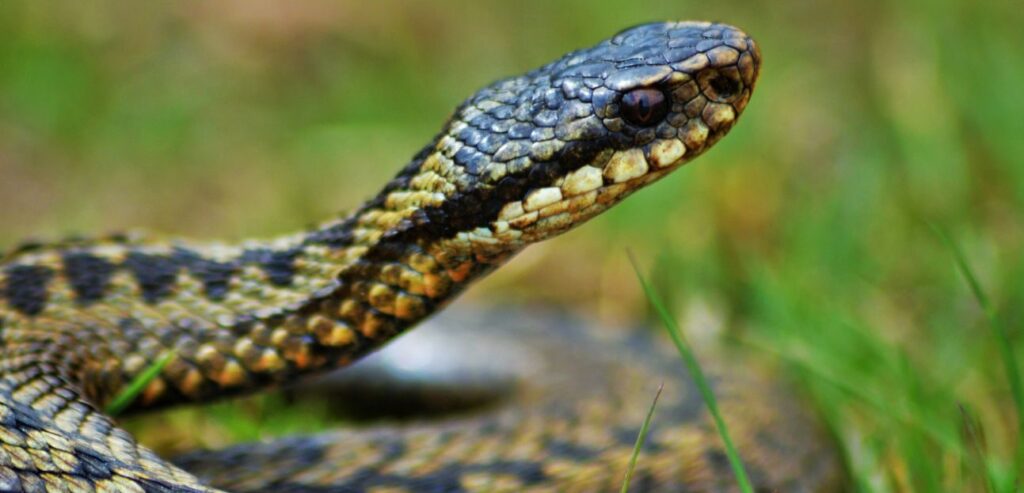
Nidderdale National Landscape is playing a leading role in a pioneering Natural England species recovery project that uses DNA analysis to reveal how healthy and connected adder populations are across England.
Adder populations in the UK are in decline nationally. Scientists and conservationists have selected Nidderdale’s adders for the national study involving whole genome sequencing – due to the area’s well-monitored populations and extensive semi-natural habitats.
The work is funded by the Natural England Species Recovery Programme, supported by Bangor University and Newcastle University, with Natural England staff delivering fieldwork locally alongside the Nidderdale National Landscape team, volunteers and staff from Yorkshire Water.
Together they are collecting DNA samples from adders to help scientists understand population health and connectivity. The whole genome sequencing technique reads the complete genetic code of each snake, revealing whether populations are mixing well or becoming isolated. Findings will be compared with study areas from further North, South, East, and West to build a clearer national picture.
However, the team has issued a warning about threats to the adders they are working to protect.
Dr Harmar added: “Adders are sensitive to disturbance by people, and this is thought to be a major factor in their current population decline.
“Adders emerge in spring in cool air temperatures and need to bask in the sun to bring up their body temperature – disturbance causes adders to seek shelter and stops them from basking. This can use up the animal’s energy reserves at a critical point in the year, affecting their survival chances,” she said.
“Nidderdale’s adders are found at remote sites and are less vulnerable to disturbance, but we had multiple recent reports of photographers actively seeking out adders within our protected landscape and sharing the location of their sites. This both disturbs and threatens them, and we strongly discourage anyone actively seeking out adders unless it is to document their population for conservation purposes.”
Nidderdale National Landscape has monitored adders for many years and believes the area could be nationally important for reptiles due to larger, less-disturbed areas of habitat than in many southern landscapes. In 2025, the team worked with Natural England to collect painless scale samples for DNA analysis by Bangor University.
The study compares Nidderdale with other reference populations from areas of high and low gene flow, to show whether populations are well connected or at risk of inbreeding. Further samples have been collected this autumn, and results will follow.
“We have surveyed adders here for several years, and we think Nidderdale could be nationally important for reptiles,” said Dr Kelly Harmar, Biodiversity Officer at Nidderdale National Landscape. “We have large areas of semi-natural habitat, which may help adder populations stay connected and the layout of our river network provides large lengths of south facing slopes in upland areas for adder basking and hibernation.”
“The genetic testing will tell us if our adders are mixing across sites or slipping into inbreeding. We are hopeful we will not see those warning signs, but the DNA should give us a clear answer,” Dr Harmar added.
Whole genome sequencing analysis looks for indicators of inbreeding and isolation. Because adders are secretive and difficult to count, genetics offers a useful indicator for population size and long-term resilience. Sister projects are running in the North Pennines National Landscape, Norfolk, Suffolk and Wales allowing for comparisons between more isolated populations and those in landscapes that appear better connected.
Dr Will Askew of Natural England, said: “Comparing an upland landscape like Nidderdale, with other upland, heathland and forest sites in other regions will help us understand how varying levels of connectivity are affecting adder populations and inform what we do to maintain or restore it.”
All sampling follows strict welfare protocols. Adders are gently captured, a tiny number of scales are taken for DNA, and the animal is released on site immediately afterwards. Staff have received specialist training from Bangor University and use protective gloves, cloth bags and Perspex tubes to keep people and snakes safe.
This is the time of year when adders will have returned to the same hibernation spots for winter. Surveys are typically carried out in autumn or in spring emergence.
For further information, please contact:
Dr Kelly Harmar, Biodiversity Officer, Nidderdale National Landscape – [email protected]
Dr Will Askew, Natural England – [email protected]
ENDS
Notes to editors
The adder (Vipera berus) is the UK’s only native venomous snake and is legally protected under the Wildlife and Countryside Act 1981.
The DNA study in Nidderdale is part of Natural England’s species recovery programme, delivered locally by Natural England and Nidderdale National Landscape staff with support from Yorkshire Water and volunteers.
Adders typically return to the same hibernation sites each autumn and emerge in spring.
Results of the DNA analysis are pending. Nidderdale National Landscape will share an update when available.
For welfare and site security, precise adder locations are not disclosed.
DNA sampling for whole genome sequencing uses a small number of scales and is painless to the animal.
Significant national survey work suggests that adders in the UK are in sharp decline, with many small populations at risk of extinction within 10 years: Make the Adder Count: population trends from a citizen science survey of UK adders | British Herpetological Society
Gallery