History and Heritage

Prehistory
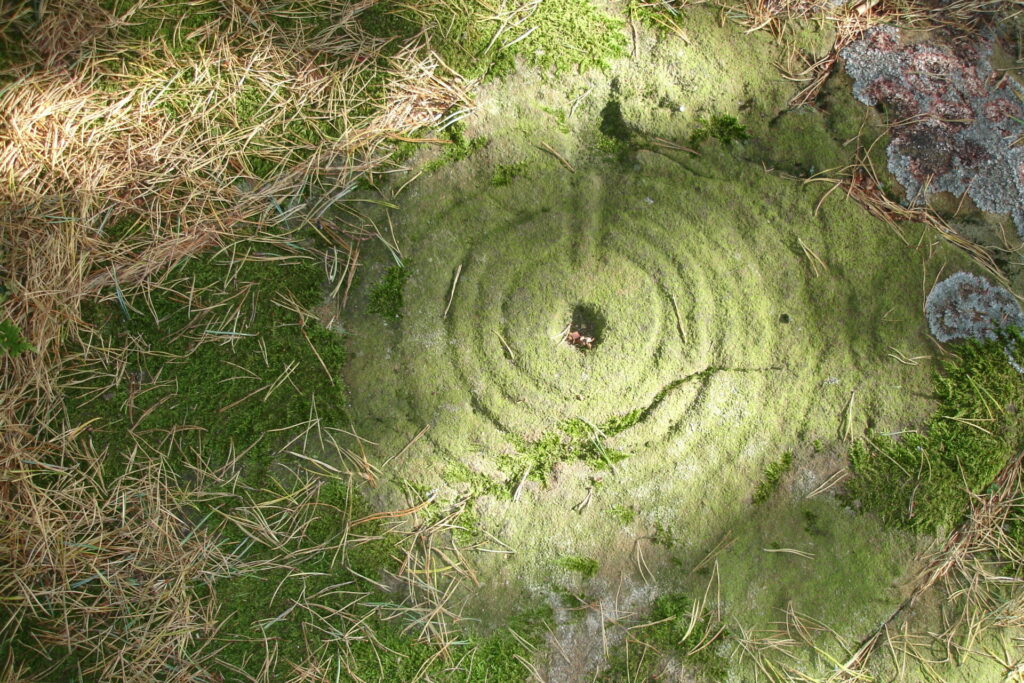
The exact length of prehistoric human activity in Nidderdale is unknown, but archaeological finds give us a glimpse of how its first inhabitants lived and worked.
The first known inhabitants arrived not long after the last ice age, during the Mesolithic period (Middle Stone Age), between around 10,000 BC and 4,000 BC. These were nomadic hunter-gatherers and evidence of their presence, including flint tools, have been uncovered on exposed peat edges on high ground above the head of Nidderdale.
The Neolithic period (New Stone Age) brought a more settled, agricultural lifestyle. In Upper Nidderdale, subtle traces of this period remain in a group of cup-and-ring marked rocks west of Gouthwaite Reservoir which date back around 5,000 years. The purpose of these circular hollows or ‘cups’ often encircled by one or more engraved ‘rings’ remains a mystery. Neolithic axes have also been found at Bishopside and Birstwith.
Further signs of early settlement are the ‘lumps and bumps’ still visible in the landscape, including the Colt Plain Bronze Age settlement west of Gouthwaite Reservoir where there is evidence of hut circles, enclosures, pits, wall foundations and ancient track ways.
From the Bronze Age, there are more definite signs of settlements in the form of burial mounds, or cairns, which can be found scattered across the high fells. Settlement and farming in Upper Nidderdale continued through the Iron Age and Romano-British periods, with remains of ancient animal enclosures and field systems still visible as earthworks beneath later features.
Explore it for yourself…
Very few traces of Nidderdale’s prehistory are visible or accessible today but there are still some indications of how people have interacted with the landscape in prehistoric and later periods. As part of the Upper Nidderdale Landscape Partnership, we produced Reading the Upper Nidderdale Landscape as a helpful guide to spotting these traces of history when you are out and about exploring the area.
Discover Nidderdale's Heritage