Farming and Industry

Railways
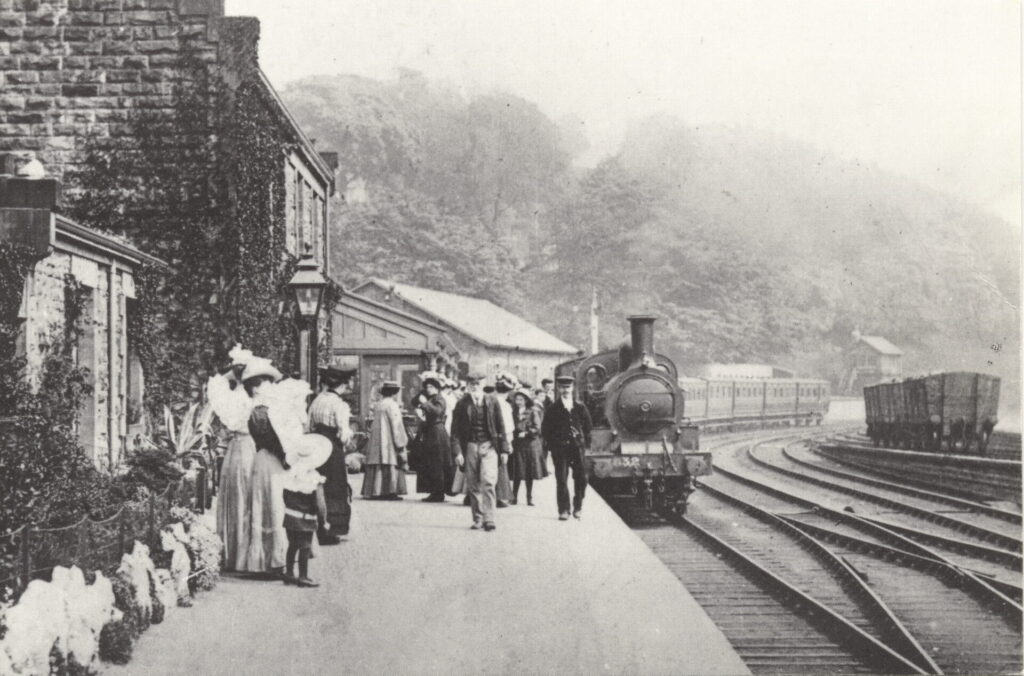
The Nidd Valley Railway opened in 1862, connecting Nidd Bridge Station near Ripley with Pateley Bridge. 11.5 miles of single track linked Nidderdale with the expansive North Eastern Railway network, unlocking new commercial opportunities and drawing visitors to the dale.
Driven by local business owners eager to invigorate Nidderdale’s economy, the railway provided a crucial route for transporting its lead, quarried stone, and flax products around the country. Stations were built at Ripley, Birstwith, Hampsthwaite, Darley, Dacre Banks, and Pateley Bridge.
As lead mining and flax spinning began to decline towards the end of the nineteenth century, the railway’s significance shifted. It became a gateway for tourists seeking the restorative powers of Nidderdale’s breathtaking views.
Passenger services along the railway from Nidd Bridge to Pateley Bridge ceased in 1951, followed by its closure to goods traffic in 1964. Improvements to rural roads and the growing popularity of buses and cars steadily diminished the railway’s appeal.
A Railway to the Reservoirs
Between 1904 and 1908, the Bradford Corporation embarked on an ambitious project to construct two large reservoirs in the upper dale: Scar House and Angram. To support this endeavour, they built the Nidd Valley Light Railway, stretching from Pateley Bridge to Angram.
Not only did this provide transport for materials to construct the reservoirs, it also created a useful passenger service for reservoir workers and visitors to the upper dale with stations at Pateley Bridge, Wath, Ramsgill, and Lofthouse. This line was taken up and its bridges demolished when Scar House Reservoir was completed in 1936.
Explore it for yourself …
Fragments of Nidderdale’s railway history can be seen today. Wander along Nidd Walk at the bottom of Pateley Bridge High Street and you’ll see the old station building for the Nidd Valley Railway. Further along this road you’ll find the Pillars Past sculpture situated on what was the station’s turntable for moving locomotives.
On the road up to Scar House Reservoir, look out for the end of Goyden Pot Tunnel tucked away off the road in a wide layby. Follow the Scar House Reservoir Trail and see how the Nidd Valley Light Railway was integral for constructing the vast reservoirs in the upper dale.
Explore history and heritage in Nidderdale National Landscape